
SV10 Continuous Soffit Vent Data Sheet (PDF, opens a new tab)
PDF · discovered on the published product page. File version and current applicability require confirmation.
Roof ventilation / Product information
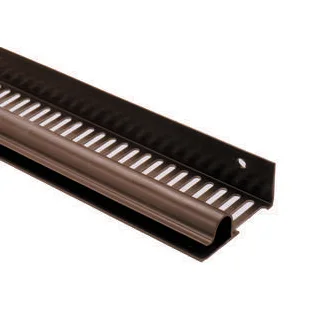
The Corovent Continuous Soffit Vent is designed to provide a solution to roof ventilation where a traditional soffit board is specified.
Published product information
Continuous ventilation along the soffit
Neat fixing
Incorporates insect grill
Available in white, black or brown
Traditional fascia and soffit boards
Full installation details are available on request from the Technical Department.
Installation
Start by measuring the continuous soffit vent, so that you know the exact distance that you need to fit into your eaves. Take these measurements, and then measure your soffit joist to ensure that you can safety fit the vent into them. Once this has been done, line up your continuous soffit vent against the joist. Using a piece of chalk, mark out the outline of the vent. Take down the vent, and put it in a safe place.
You should then proceed to cut out the soffit with either a hacksaw or a power tool. The power tool, such as a circular saw, will give you greater speed and strength when cutting the soffit, but the hacksaw can give you precision, meaning less errors. You should cut a slightly smaller area than the continuous soffit vent needs, and then remove the rest of the area by knife, trimming it when you come to fit the vent.
Place the outside edge of the vent into position, and use the drill to drive screws around a foot apart all the way along the vent. You should then go into your attic, and remove the insulation surrounding the new vent hole. Place one or two pieces of lumber between your attic rafters, in order to prevent the insulation from touching the vent, and then make a clear path for the air between the rafters. If you need to make another hole for a different vent, you should place this close to the soffit vent.
Inside the attic, add the inside part of the vent to the soffit, placing it around the rafters so that it is held securely in place. If there are studs nearby, screw the soffit vent close to this for that you have additional security. You should then go around the edge of the vent, making sure that it is thoroughly caulked. On the outside, you can either use waterproof caulking or add roof tar to the edges. This will ensure that your continuous soffit vent is secure and watertight, so you can draw in air without making the attic floor damp.
Supporting resources
PDF · discovered on the published product page. File version and current applicability require confirmation.
PDF · discovered on the published product page. File version and current applicability require confirmation.
Linked in the published catalogue
Range & components
Corovent Roofline vents are made to blend in discreetly with existing roof tiles. They incorporate a factory fitted round felt sleeve which penetrates the felt, so no extra slee…
Explore rangeRange & components
Corovent Cowl vents offer unobtrusive low or high level ventilation in tile roofs. The Cowl vent can blend almost invisibly to any roof: new build or conservation, because of Ar…
Explore rangeRange & components
Corovent Ridgeline Vents are designed to replace a normal ridge tile suiting most concrete and clay ridges. Their unique design allows them to be fitted without cutting any exis…
Explore rangeRange & components
Eaves ventilation is a simple and effective way of providing the necessary air movement within a cold roof. It is most effective when used in conjunction with high level roof ve…
Explore rangeRange & components
The rafter tray maintains a clear air space of either 10 or 25mm from the eaves to the roof void, by creating a barrier for the roofspace insulation.
Explore rangeRange & components
Ariel provide a range of soffit vents designed for use with a traditional fascia and soffit board. Available in black, brown or white, soffit vents can be used with any roof pitch.
Explore rangeRange & components
An extensive range of high quality ventilation accessories for easier and quicker installation of Corovent Roof Ventilation products.
Explore rangeProduct & project support
Keep this product context with your enquiry and let Ariel confirm the next step.
Content imported from Ariel’s published product information, captured 27 October 2026. Final technical/content approval is pending; current stock, delivery and warranty assurances are not asserted. Source reference (opens a new tab) ↗